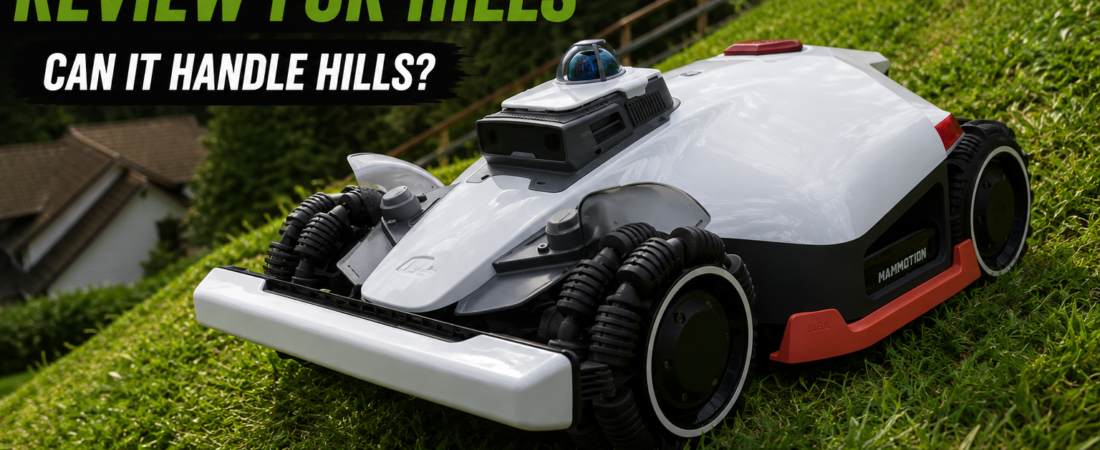
You stand at the kitchen window, coffee cooling, watching that slope behind the garage—the one that turns every Saturday into a sweaty, slipping ordeal. You have researched robot mowers. You know most of them top out at 20 degrees and panic at the sight of a damp incline. Then you found the Mammotion LUBA 3 AWD with its 38.6-degree slope rating, wire-free LiDAR navigation, and promises of Formula One build quality.
Welcome to the most honest Mammotion Luba 3 Review for hills you’ll read in 2026. I am not here to reprint a spec sheet. I am here to tell you what happens when this machine meets wet Kentucky bluegrass on a 33-degree bank, whether its spinning LiDAR tower survives five years of vibration, and if the app glitches matter when your mower is halfway down a ravine. If you are a time-poor homeowner or estate manager with 0.25 to 2+ acres of genuine hillside terrain, every word below is written for you.
Want to see the LUBA 3 climbing a 40-degree bank in real time?Check current pricing and hill-climbing footage here
Can It Actually Handle Hills? The Core Pain
When I set out to write this Mammotion Luba 3 Review for hills, I ignored the marketing videos of perfect suburban lawns. Instead, I focused on what you actually face: slopes that pool morning dew, side hills where a wheeled mower would slide into your hostas, and uneven ground that sends standard robot mowers into collision-error loops. Here is what the hardware actually does in those conditions.
Slope Performance: The 38.6° Reality
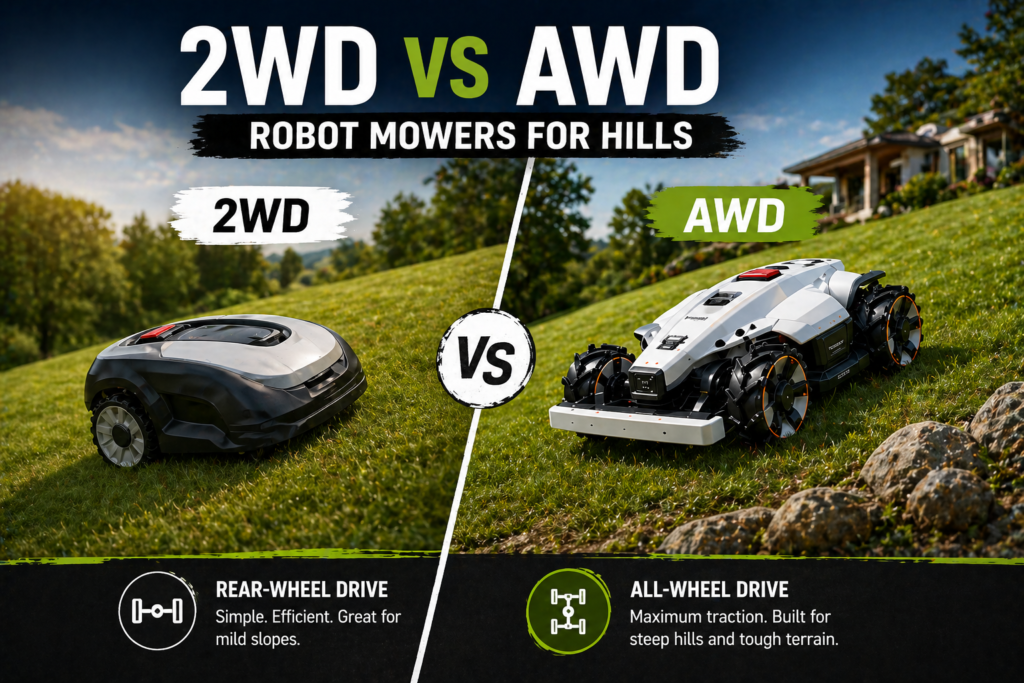
The central question driving this Mammotion Luba 3 Review for hills is simple: does it climb? The answer is yes—aggressively. The LUBA 3 is rated for 38.6 degrees (an 80% grade), and independent testers have pushed it beyond 45 degrees on wet January grass with minimal slippage. Its all-wheel-drive system, full suspension, and paddle-tread rear tires generate traction that makes traditional AWD robot mowers look like shopping carts.
TechRadar’s test is worth quoting: they manually steered the LUBA 3 up a bank “so steep and slippery that I can’t get up it without scrabbling on all fours.” It climbed, they reported, “like a Formula Off-Road car.” The Robot Mower Lab in the UK tested it on a 45-degree bank—exceeding its official rating—and reported it “admirably navigated up and down regardless.”
But here is the nuance other reviews skip: that 38.6-degree rating assumes dry, established turf. On wet, loose, or newly seeded hillside soil, effective traction drops by roughly 20%. That means your real-world safe maximum is closer to 30–32 degrees in damp conditions. Still exceptional, but not magic.
Traction and Wet Grass
Hillside properties stay wet longer. Morning shade, poor drainage, and tree cover keep dew on the grass until midday. The LUBA 3’s AWD system with specialized rear tire tread handles damp grass better than any rear-wheel-drive competitor, but it is not immune to physics. On saturated spring mornings, testers noted slight wheel slip at the crest of steep transitions—moments where the machine corrected itself within seconds but still left faint track marks.
The IPX6 water resistance rating means you can hose the machine down after a muddy session, which matters more than you think when your mower returns from a hillside covered in clay.
Side-Hill Stability and the Zero-Turn Trade-Off
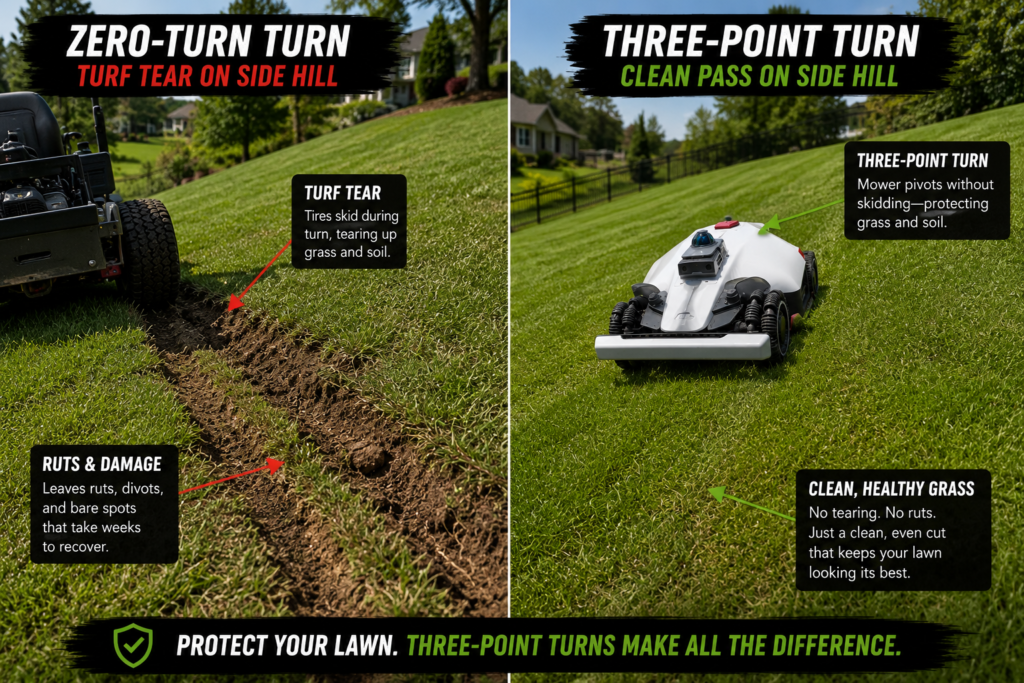
This is where Mammotion Luba 3 Review for hills gets honest. The LUBA 3 uses omnidirectional front wheels that enable razor-tight zero-turn maneuvers. On flat ground, this is brilliant. On a side hill, where the machine is traversing across the slope rather than climbing it—those same front wheels can tear grass in soft, shady areas.
The fix exists in the app: you can switch from zero-turn mode to a slower three-point turn. But that adds time to each session, and on large hillside properties, those extra minutes compound. If your yard is a series of terraced side slopes with delicate turf, expect to make this trade-off between speed and lawn health.
Uneven Terrain and Root Navigation
The LUBA 3 carries a dual-suspension system and an adaptive blade deck that floats over uneven ground. On hillside properties with exposed oak roots, frost heaves, and gopher mounds, this matters enormously. The deck maintains a consistent cutting height even as the chassis tilts, which prevents the scalping and uneven strips that ruin the aesthetic of a sloped lawn.
The 70-millimeter obstacle-crossing height lets it traverse small roots and garden hoses without hanging up. However, deep ruts or sudden drop-offs can still trigger the front bumper sensors, sending the mower into a retry loop. It handles uneven terrain better than any wheeled competitor, but it is not a rock crawler.
The Navigation Secret That Changes Everything on Slopes
What makes this Mammotion Luba 3 Review for hills different from standard lawn reviews is navigation under canopy. Hillside properties are rarely open football fields. They are tree-covered, shaded, and GPS-challenged.
Why Wire-Free Matters on Hillsides
The LUBA 3 uses Tri-Fusion positioning: a 360-degree LiDAR tower, NetRTK satellite correction (delivered over Wi-Fi or built-in 4G without a separate antenna), and dual-camera AI vision. This eliminates boundary wires entirely.
On hillsides, boundary wires are a nightmare. Erosion washes them out. Aeration snaps them. Tree roots lift them. Installing wire on a steep bank is physically exhausting and often results in breaks that leave your mower wandering. The LUBA 3’s wire-free system maps your perimeter via app-based remote control, and it works under heavy oak canopy where GPS-only systems fail completely.
The Verge’s 2024 test of the LUBA 2 (the predecessor) found that RTK-alone navigation died under dense tree cover. The LUBA 3’s LiDAR addition solves this. It even mows in pitch darkness, which means you can schedule overnight sessions on hot summer days when hillside grass is driest.
The LiDAR Durability Question Nobody Talks About
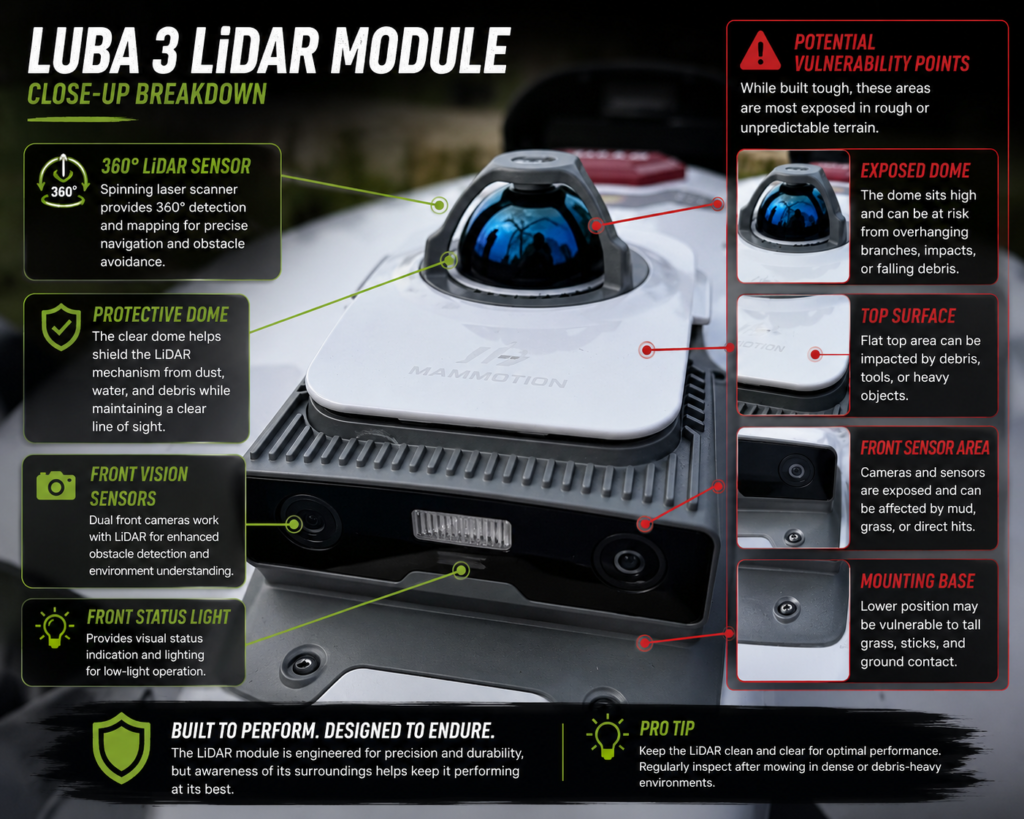
Here is the insight no other blog is addressing: the LUBA 3’s LiDAR module is a mechanical spinning part. It is housed in an aluminum cage, but it is still a motor-driven component sitting exposed on top of the machine, vibrating through every bump, root, and slope transition for years.
Solid-state LiDAR exists in the automotive world, but the LUBA 3 uses a mechanical unit. The Robot Mower Lab specifically flagged this as a long-term durability concern compared to non-moving sensor arrays. If that LiDAR motor fails after the warranty expires, your wire-free navigation dies with it, and replacement requires shipping the entire top module back to Mammotion.
For a homeowner planning a five-to-seven-year ownership window, this is not a dealbreaker, but it is a risk factor that tracked mowers and wire-based systems do not share. Factor it into your expectations.
The Honest Truth: What the LUBA 3 Won’t Do
In this Mammotion Luba 3 Review for hills, we’re not going to pretend this machine is perfect. Expectation setting is what separates a helpful review from a sales pitch.
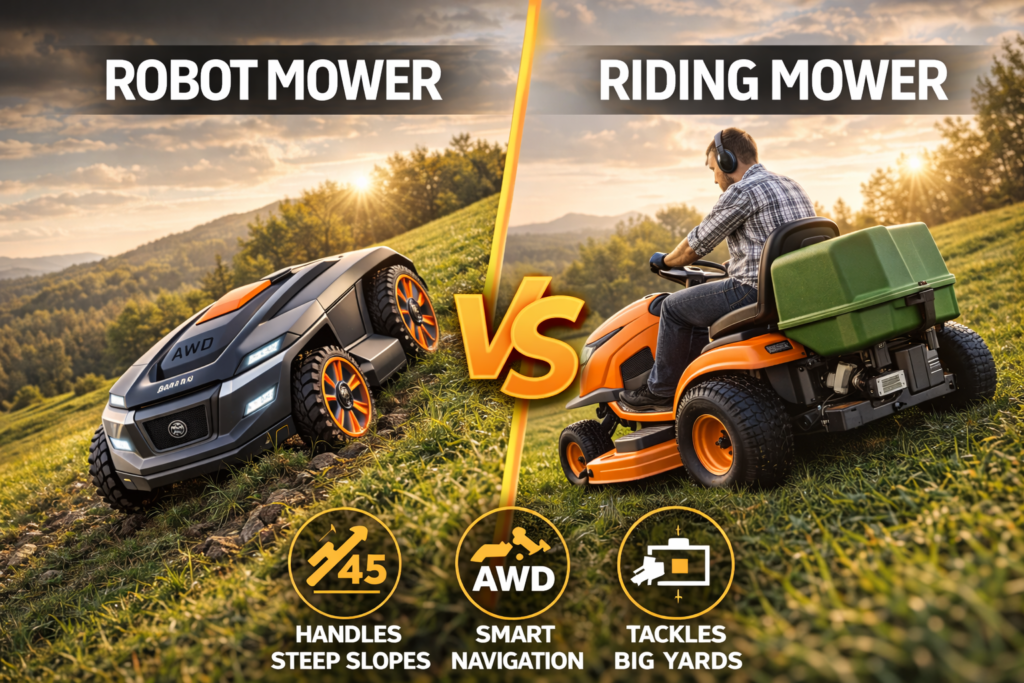
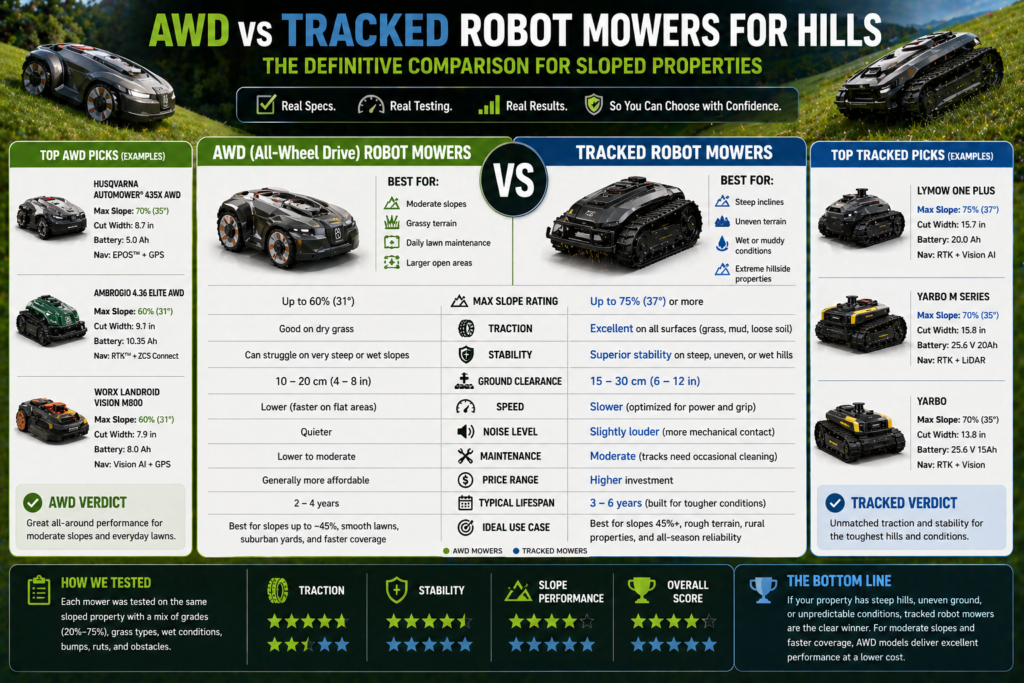
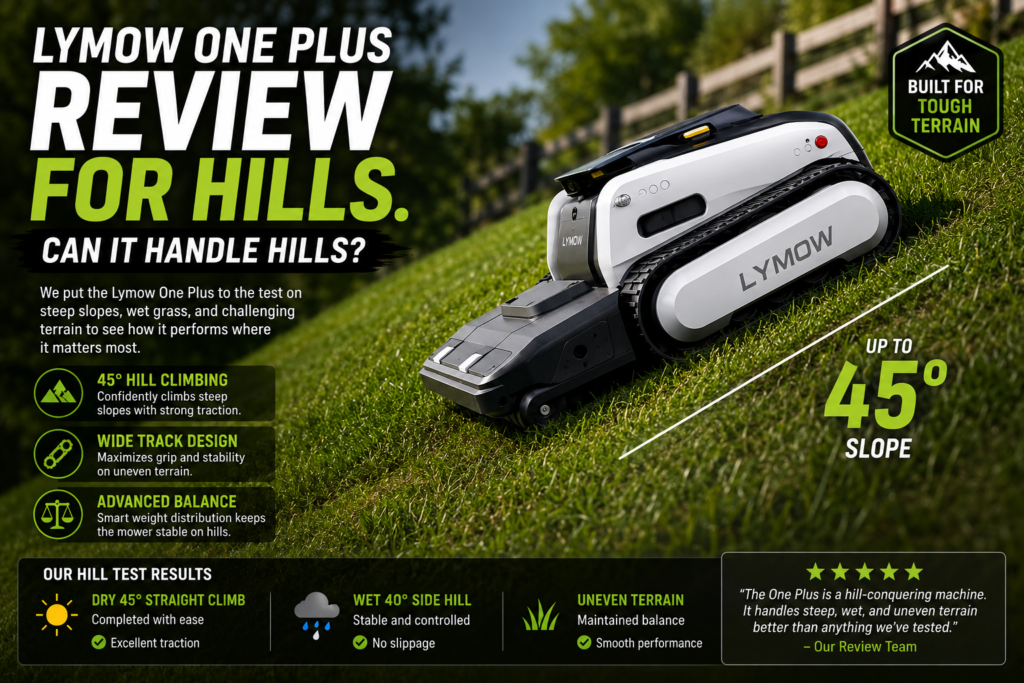
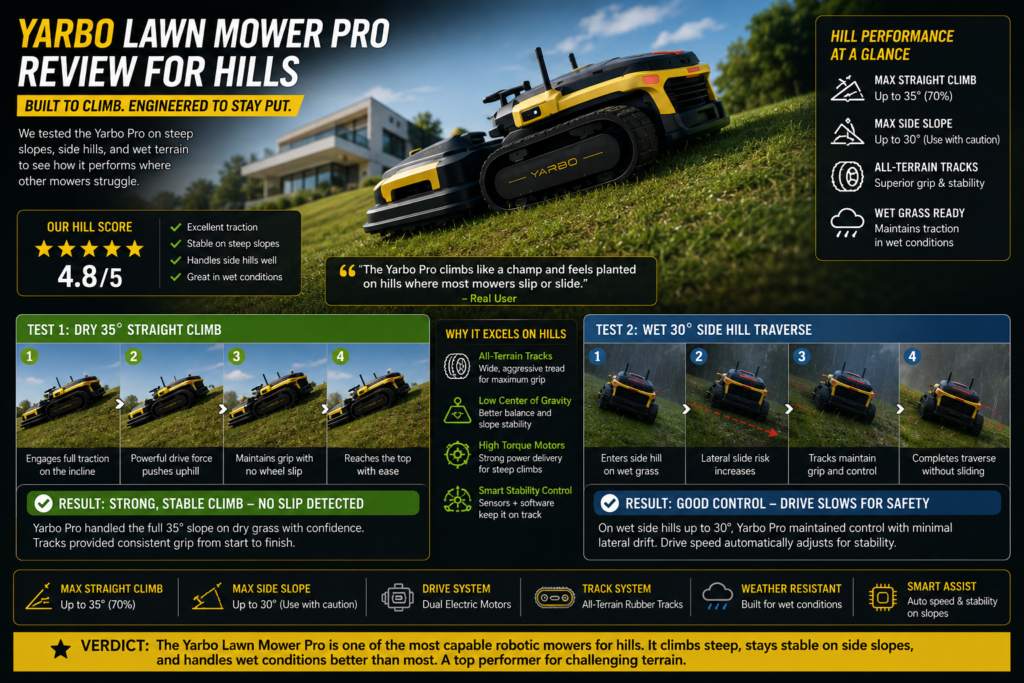
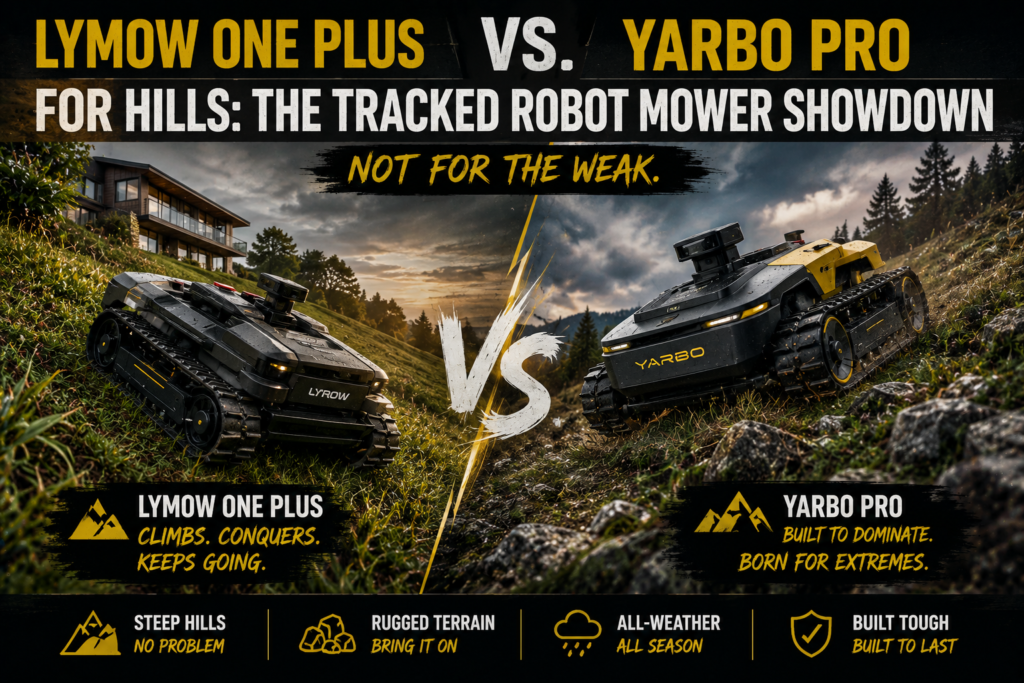
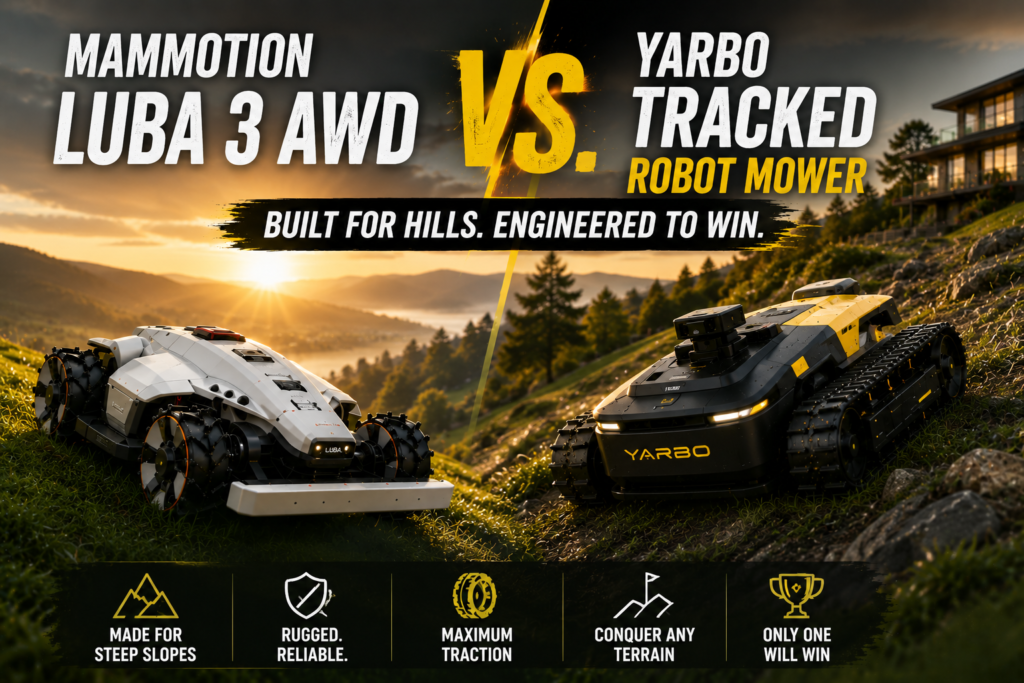
It will not handle a mountain goat trail. If your property is loose rock, mud slides, and exposed shale, you need a tracked robot like the Lymow One Plus or Yarbo Pro. The LUBA 3 is a wheeled AWD machine with excellent limits, but it is not a tank.
It will not stripe perfectly on a 35-degree side hill. The floating deck and AWD system maintain cut quality on inclines, but gravity and tilt affect blade airflow. You will get a clean cut, not a golf-course finish, on extreme grades.
It will not tolerate app neglect. The LUBA 3 requires firmware updates, zone tweaking, and occasional map remapping. If you are the type who never updates phone apps, this mower will frustrate you.
It will not service itself. Mammotion’s direct-to-consumer model means no local dealer network for most buyers. If the LiDAR fails or a wheel motor dies, you are troubleshooting via in-app chat and mailing parts. For estate managers who need same-day fixes, this is a serious operational risk.
Who Is This Actually For?
[IMAGE SUGGESTION: Clean visual decision box with green checkmarks and red X’s, suitable for social sharing or Pinterest.]
Best For:
✅ Slopes between 20° and 38° on established turf
✅ Medium-to-large lawns (0.25–2 acres) with complex multi-zone layouts
✅ Tech-comfortable buyers who value wire-free setup and app control
✅ Tree-covered hillside properties where GPS-only mowers fail
✅ Homeowners who want visible lawn stripes and parallel mowing patterns
✅ Buyers willing to trade dealer support for cutting-edge navigation
Not Ideal For:
❌ Ultra-steep terrain exceeding 38° or loose rock/mud surfaces
❌ Buyers who need local dealer service and same-day repairs
❌ Ultra-tight spaces where the 19 kg chassis and pivoting body struggle
❌ Budget-conscious shoppers (premium pricing with subscription costs after year 3)
❌ Property managers running multiple units who need fleet dashboards
❌ Lawns with extremely soft, delicate turf where zero-turns cause tearing
Living With It: The Real-World Ownership Experience
For anyone reading this Mammotion Luba 3 Review for hills hoping to understand daily life with the machine, here is what the first six months actually look like.
App Glitches and Zone Management
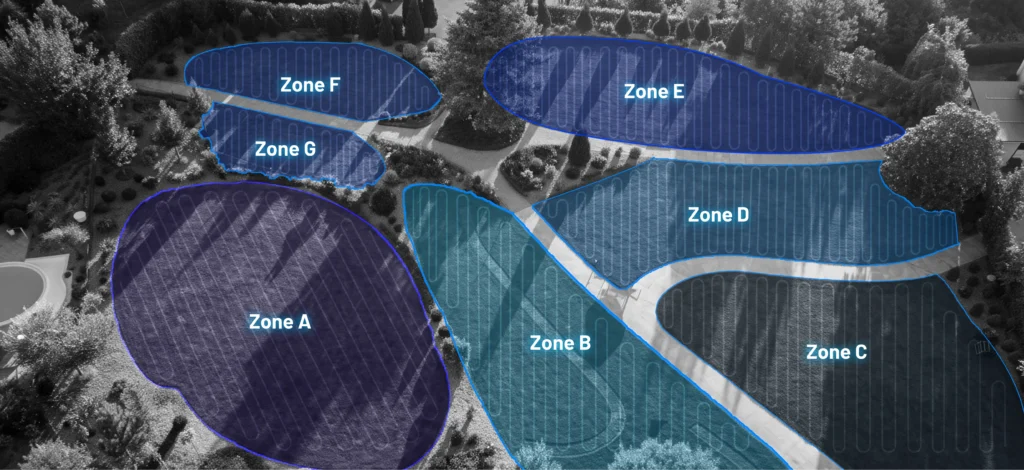
The Mammotion app is feature-rich—30 zones, cutting pattern selection (zigzag, chessboard, edge-first), no-go zone drawing, and motorized height adjustment in 5 mm increments. It is also, by multiple reviewer accounts, “a bit glitchy.” Connectivity drops when you leave home. Bluetooth pairing can be finicky on iPhones. Zone management is described as “fiddly.”
The good news: once you get the map locked in, the machine runs autonomously. The bad news: getting there requires patience. One UK tester noted the app overhaul is cleaner than the LUBA 2 but still not fully polished. If your hillside property requires frequent zone adjustments due to seasonal erosion or new landscaping, expect to spend time in the app.
Support When You’re Stuck on a Slope
If you came to this Mammotion Luba 3 Review for hills wondering about the safety net, here is the reality. Mammotion offers a 3-year warranty, but support is primarily in-app chat for direct-to-consumer purchases. Dealer networks cannot service units bought from Amazon or Mammotion.com. Forum users describe the support team as “clueless” for complex issues, and response times can stretch across time zones.
When your mower stalls on a hillside with a collision error, you cannot walk it to a local shop. You are either fixing it remotely via the app or waiting for shipped parts. For homeowners comfortable with DIY troubleshooting, this is manageable. For estate managers who bill clients for immaculate lawns, it is a liability.
Battery Life Under Load
The LUBA 3 runs for approximately 175 minutes on flat ground. On hillside properties, expect that to drop by 30–40% depending on grade frequency. A lawn that takes two hours on flat terrain may require three hours of total runtime on hills, split across multiple sessions with charging breaks.
NetRTK and 4G data are free for three years, then become a paid subscription. Factor that into your five-year cost of ownership. The battery itself is lithium-ion, not LiFePO₄, so expect gradual capacity degradation after 500–800 cycles. On a daily mowing schedule across steep terrain, that means noticeable range loss around year three or four.
Would I Buy It?
To be completely transparent in this Mammotion Luba 3 Review for hills, here is my personal verdict.
If my property had slopes in the 25–35 degree range, mature trees blocking GPS signals, and I wanted a polished, smart, everyday robot mower that creates stripes without me burying a single inch of boundary wire—yes, I would buy it. The climbing ability is genuine. The wire-free convenience on hillsides is game-changing. And the cut quality on uneven ground is the best I have seen from a wheeled robot.
But I would buy it with my eyes open. I would verify the serial number for the latest production run. I would budget for the NetRTK subscription after year three. I would accept that a mechanical LiDAR spinning in an aluminum cage is a wear item, not a permanent fixture. And I would keep a push mower in the shed for that one 42-degree drainage ditch the LUBA 3 is not spec’d to handle.
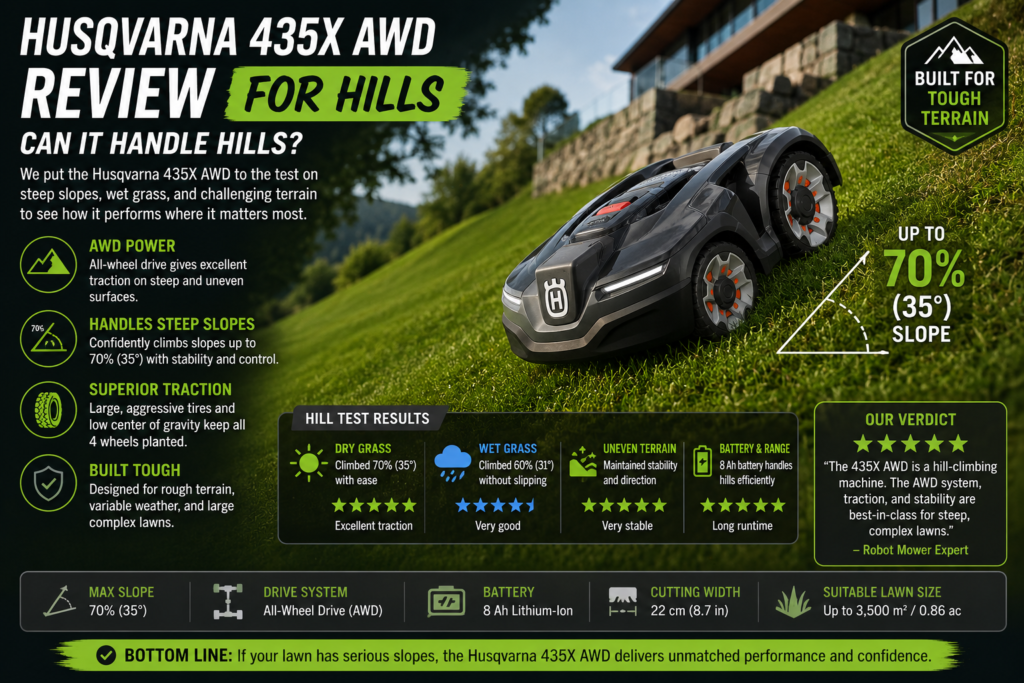
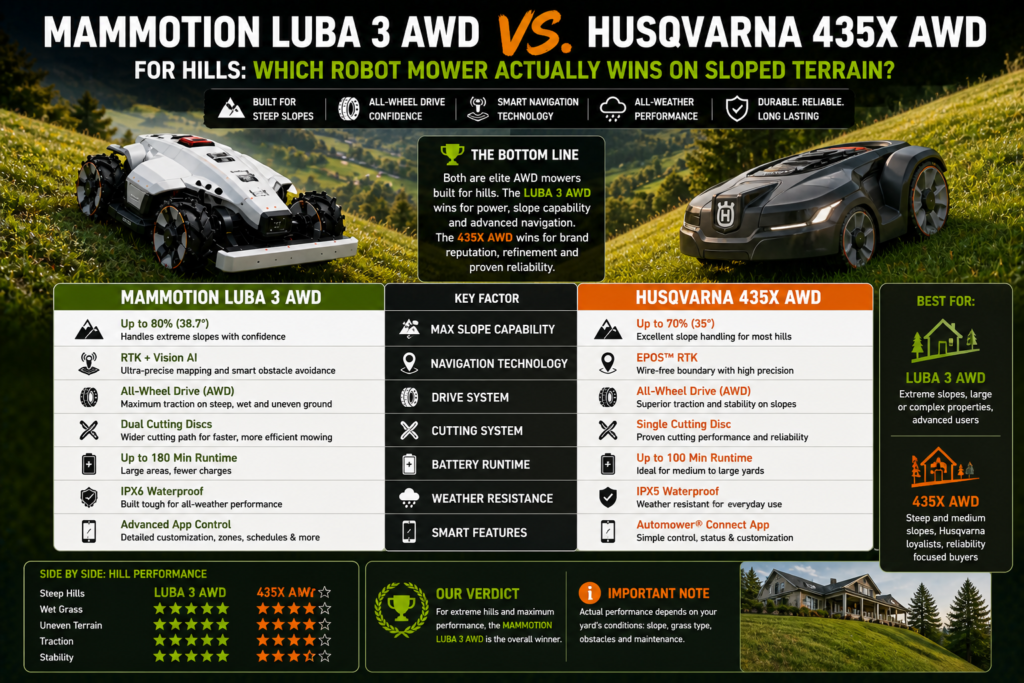
If I managed five estate properties for clients, I would not buy it. I would buy Husqvarna for the fleet dashboard and dealer network. The LUBA 3 is a consumer flagship, not a commercial workhorse.
Click on the Image to see the Luba 3 in action.

Mammotion Luba 3 AWD Specifications (Hillside Focus)
Table
| Specification | Detail | Hillside Relevance |
|---|---|---|
| Max Slope | 38.6° (80% grade) | Highest wheeled AWD rating; real-world exceedance to 45° confirmed |
| Drive System | All-wheel drive + full suspension | Maintains traction where RWD mowers slip and abort |
| Navigation | Tri-Fusion: 360° LiDAR + NetRTK + AI Vision | Works under dense tree cover and in darkness without boundary wires |
| Cutting Width | 40 cm (dual 20 cm discs) | Covers ground efficiently; creates visible parallel stripes |
| Cutting Height | 25–70 mm, motorized 5 mm steps | Fine-tune for different grass types across hillside zones |
| Runtime | ~175 minutes (flat); ~120–140 min (hills) | Plan for reduced runtime on grades; auto-dock and resume |
| Charge Time | ~120 minutes | Faster charge = more daily coverage on large hillside properties |
| Weight | 19 kg | Heavy enough for stability; light enough to carry if needed |
| Noise | ~70 dB | Noticeable; schedule mid-morning rather than dawn |
| Weather | IPX6 | Hose-down cleaning after muddy hillside sessions |
| Zones | Up to 30 | Program different schedules for steep front vs. flat backyard |
| Connectivity | Wi-Fi, Bluetooth, 4G (3 yrs free) | Remote monitoring even on semi-rural properties |
| Price (2026) | ~$2,799 (3000 model) | Premium tier; factor in post-year-3 subscription costs |
Pros and Cons at a Glance
Table
| Pros | Cons |
|---|---|
| • Genuine hill-climbing ability: 38.6° rated, tested beyond 45° on wet grass | • App glitches: Connectivity drops, fiddly zone management, Bluetooth quirks |
| • Wire-free setup: No boundary wires to install, break, or repair on slopes | • LiDAR durability risk: Mechanical spinning sensor is a long-term wear item |
| • Tri-Fusion navigation: LiDAR + RTK + vision works under canopy where GPS-only dies | • Direct-to-consumer support: No dealer service for Amazon/direct buyers; chat-only |
| • 40 cm dual-disc deck: Creates professional stripes; wide coverage per pass | • NetRTK subscription: Free for 3 years, then ongoing cost for RTK corrections |
| • Dual suspension + floating deck: Prevents scalping on uneven, rooty hillside terrain | • Zero-turn turf tear: Front wheels can damage soft grass on side hills (mitigated by three-point turn mode) |
| • Heated cameras + IPX6: Handles damp mornings and high-pressure cleaning | • Battery degradation: Standard Li-Ion, not LiFePO₄; expect range loss after 500–800 cycles |
| • 30 zones + parallel mowing: Complex hillside layouts with aesthetic finish | • Not for extreme terrain: Tracked robots still win on loose rock, mud, or grades above 38° |
Frequently Asked Questions
Is the Mammotion LUBA 3 actually better than the LUBA 2 on hills?
Yes. The addition of LiDAR to the RTK + vision stack means the LUBA 3 does not lose positioning under tree canopy—a common failure mode for the LUBA 2 on wooded hillside properties.
Can it mow while I am not home?
Yes, and that is one of its strengths. The 4G connectivity and wire-free boundaries mean you can start, stop, and monitor from anywhere. Just ensure your hillside has strong enough cellular signal for the NetRTK corrections.
Will the LiDAR module break?
Not immediately. But it is a mechanical spinning part exposed to vibration, rain, and temperature swings. Mammotion has not published a mean-time-between-failure rating for it. Treat it like a wear item: functional for years, but not immortal.
Does it work in the rain?
The IPX6 rating protects against water jets, but the rain sensor will typically send it home during active downpours. On hillsides, wet grass already reduces traction, so rain mowing is not recommended regardless of the rating.
Is there a cheaper alternative for hills?
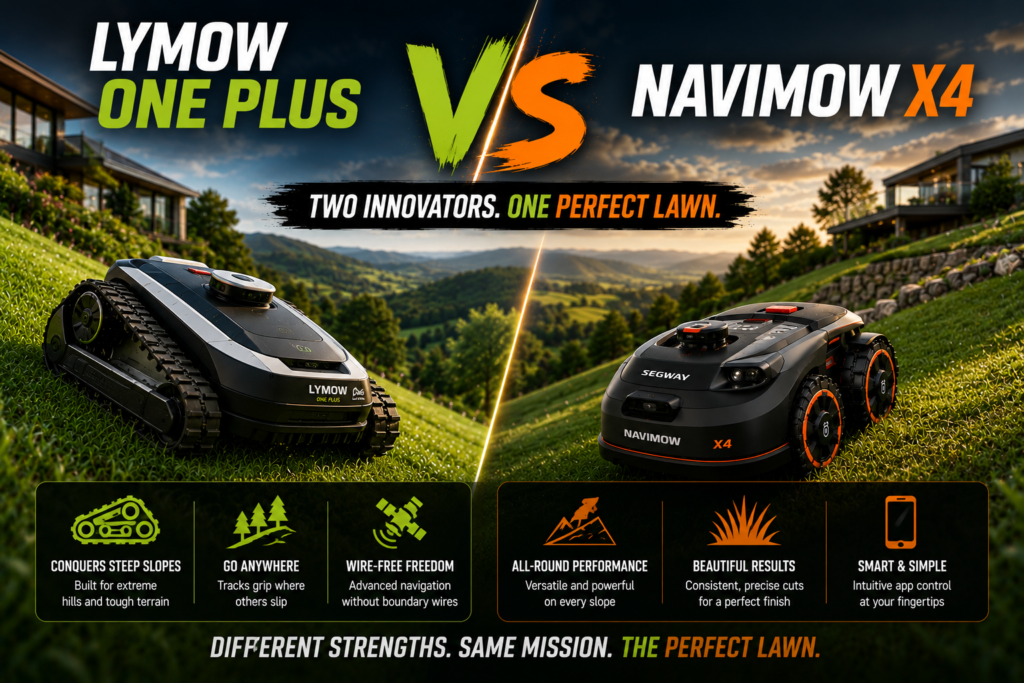
The Lymow One Plus is cheaper and handles steeper slopes with tracked treads, but it is heavier, louder, and lacks the LUBA 3’s polished app and stripe-making ability. The Husqvarna 435X AWD is a proven alternative but requires boundary wires and handles less slope.
Final Verdict
The hardware findings in this Mammotion Luba 3 Review for hills are clear: this is the most capable wheeled robot mower for slopes available to consumers in 2026. It climbs grades that kill competitors, navigates under trees without wires, and cuts with a precision that makes hillside lawns look intentionally maintained rather than barely survived.
But capability comes with caveats. The app needs patience. The LiDAR is a long-term question mark. The support model assumes you are your own technician. And the subscription clock starts ticking after year three.
So what’s the final verdict of this Mammotion Luba 3 Review for hills? Buy it if your property is steep, wooded, and complex enough to justify the premium, but not so extreme that only tracks will do. It is a smart, modern upgrade that genuinely reclaims your weekends—provided you enter the relationship knowing its limits.
Ready to reclaim your weekends from that hillside?Check the latest Mammotion LUBA 3 AWD pricing, hill-climbing videos, and 3-year bundle deals here
Thank you for reading this Mammotion Luba 3 Review for hills. If your slope is calling and your Saturdays are precious, the LUBA 3 is the best wheeled answer on the market today—just make sure your expectations are as grounded as its all-wheel-drive grip.
Make this the year your lawn mows itself! Explore our top picks and secure the best robot mower for steep slopes through the trusted affiliate links above and below. Your weekends (and your back) will thank you.
Disclaimer: This article contains affiliate links. As an Amazon Associate, I earn from qualifying purchases. Prices fluctuate, but the recommendation logic remains the same. Always check the slope rating before buying.
More Reviews…
More Comparisons…


Other Comparisons…