If your 0.25–2+ acre property includes noticeable hills, mature tree clusters, exposed roots, narrow passages, or multi-zone obstacles, you already feel the weight of every weekend. Hours disappear under the roar of a push or riding mower while you battle slipping on wet banks, uneven cuts around trunks, missed spots under low branches, physical fatigue, and the looming mental burden of “the hill problem.” Safety concerns on steep sections only add to the stress, especially when juggling work, family, and limited free time.
For time-poor homeowners with a small estate or property managers looking to cut labor costs, a capable robot mower is supposed to deliver freedom, consistent professional results, and relief without constant effort. That’s precisely why the navimow x4 vs dreame a3 comparison is so important in 2026.
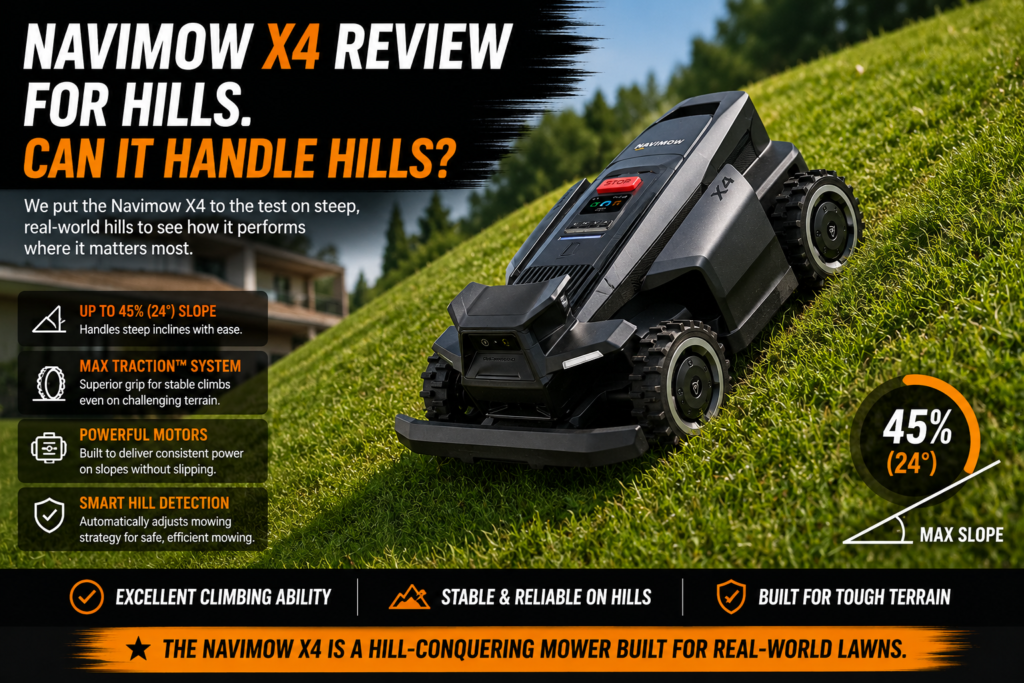
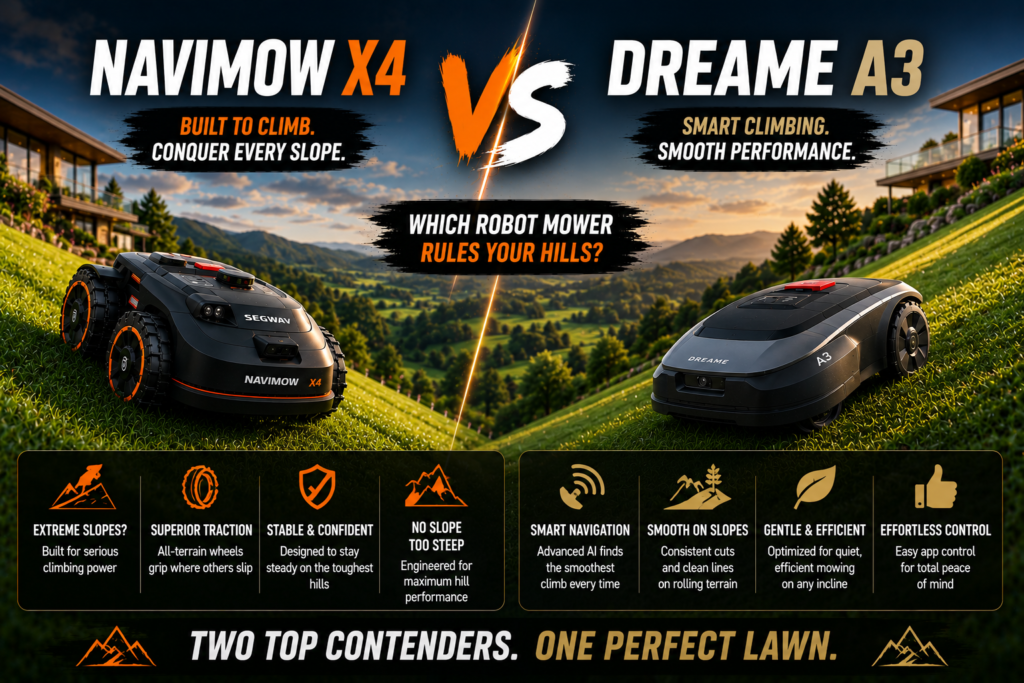
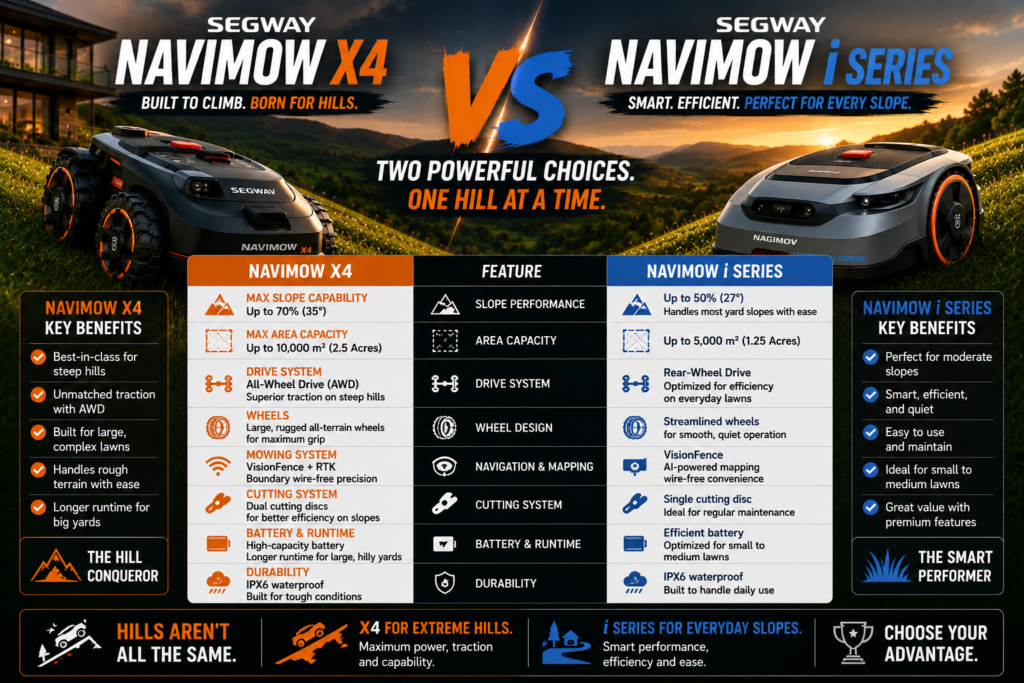
Both are premium wire-free AWD machines built for challenging terrain, yet they take distinct approaches. The Segway Navimow X4 emphasizes Xero-Turn AWD with dual suspension and traction control for turf-safe agility on slopes. The Dreame A3 AWD Pro leans on OmniSense 3.0 360° 3D LiDAR paired with binocular AI vision for exceptional performance in shaded, tree-heavy areas where traditional RTK can falter.
This comprehensive guide draws from 2026 manufacturer specifications, independent slope and cut-quality tests, YouTube real-world hill demos, Reddit owner experiences in r/roboticLawnmowers, and forum discussions to give you insights most comparison articles overlook. You’ll discover how each model handles wet grass on inclines, long-term turf health after repeated passes, firmware-driven improvements, and real ROI for your specific yard type. For busy professionals and managers who value efficiency and smart tech but are cautious about wasting money, the right choice in the navimow x4 vs dreame a3 matchup means 2–4+ hours reclaimed weekly, reduced safety risks, and pride in a lawn that looks great without struggle.
Why the Navimow X4 vs Dreame A3 Matters for Your Sloped, Tree-Covered Property
Most online reviews focus on flat suburban lawns or basic specs. What they rarely address is how these machines perform on the exact combination of slopes, roots, and partial canopy that defines suburban, semi-rural, and estate yards. The Navimow X4’s 84% (40°) slope rating and low center-of-gravity design shine when contour-mowing around obstacles without tearing turf. The Dreame A3’s RTK-independent LiDAR system maintains accurate mapping even under dense tree cover where GPS signals weaken.
For your lifestyle—valuing convenience and modern upgrades while avoiding unnecessary expense—this navimow x4 vs dreame a3 decision directly solves your core pain points: slipping on hills, inconsistent cuts, and the mental load of weekend chores. The winner delivers true set-and-forget operation that lets you spend time with family instead of on the mower.
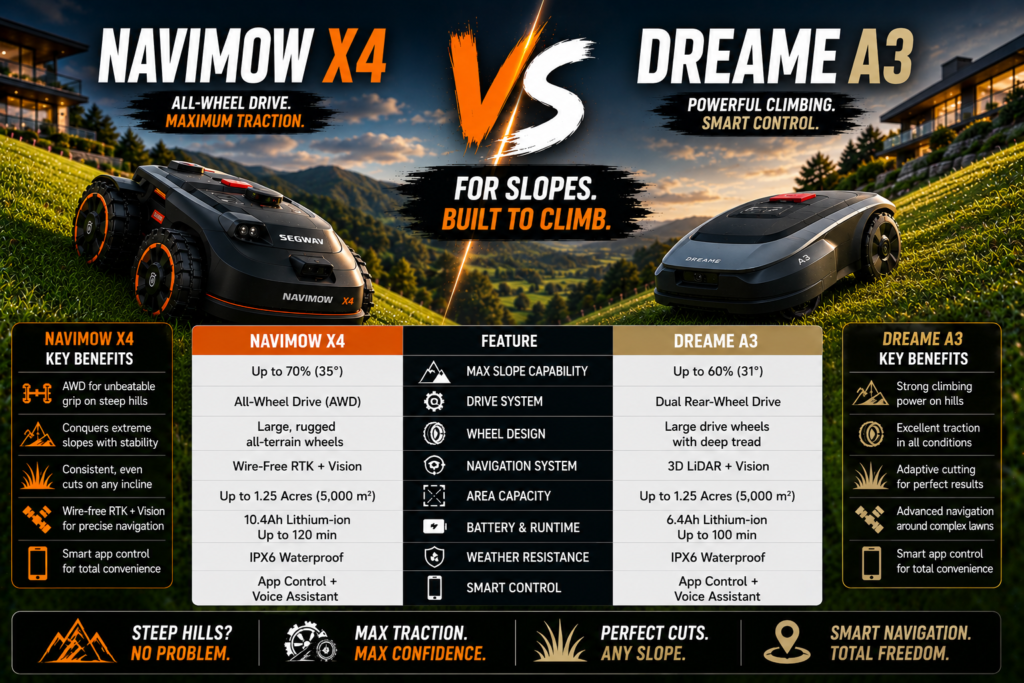
Head-to-Head Specifications: Navimow X4 vs Dreame A3
Here’s the practical 2026 data that matters most for sloped yards:
| Feature | Segway Navimow X4 | Dreame A3 AWD Pro | Practical Edge for Your Yard |
|---|---|---|---|
| Drive System | Xero-Turn AWD + dual suspension | 4WD hub motors + adaptive torque | Navimow (turf-safe agility) |
| Max Slope | 84% (40°) | 80% (38.7°) | Navimow |
| Navigation | Network RTK + 360° Vision + VIO | OmniSense 3.0 360° 3D LiDAR + binocular AI | Dreame (heavy tree cover) |
| Cutting Width | 17 inches (dual-disc) | 15.8 inches | Navimow (faster coverage) |
| Obstacle Clearance | Up to 2.8 inches | Up to 2.2–5.5 cm | Navimow |
| Weight | ~41–45 lbs | ~40–42 lbs | Tie |
| Multi-Zone Support | 30+ programmable zones | 20+ with AI auto-mapping | Dreame (shade mapping) |
| Approx. Price (2026) | $2,499–$4,500 | $2,300–$2,600 | Dreame (strong value) |
This table shows the navimow x4 vs dreame a3 is close on paper, but real slope and tree performance creates a clear winner for most 0.25–2+ acre properties.
Slope Performance: Real-World Hill Climbing in the Navimow X4 vs Dreame A3
YouTube slope stress tests and 2026 owner videos reveal both machines are capable, but differences emerge on demanding terrain. The Navimow X4’s AWD with intelligent traction control and perfectly balanced 5:5 center of gravity maintains forward momentum on saturated 40° banks with virtually no spinning or rutting. Its Xero-Turn geometry allows smooth contour changes around roots or garden beds without tearing turf—an advantage that becomes obvious after repeated weekly passes.
The Dreame A3 climbs 38.7° inclines confidently with strong 4WD torque and adaptive power delivery. However, it can show slightly more hesitation on wet, root-filled transitions or when changing direction mid-slope. Reddit users in sloped neighborhoods frequently note the Dreame feels powerful and stable on consistent grades, yet the Navimow edges it out on combined hill + obstacle runs.
A detail most comparisons ignore: On long, undulating hills with partial tree cover, the Navimow’s hybrid navigation keeps consistent speed during turns, reducing energy drain and minimizing the risk of stuck incidents. This translates to healthier grass over seasons because the mower avoids the repeated struggling that compacts soil or creates bare spots.
Navigation and Obstacle Handling in Tree-Heavy, Sloped Yards
Dense canopies and roots are often the hidden deal-breaker. The Dreame A3’s OmniSense 3.0 LiDAR system excels here—no dependence on clear sky view means reliable 3D mapping even under heavy shade. Its binocular AI vision identifies 300+ obstacle types with sub-centimeter edge precision, making it excellent for dodging low branches, exposed roots, or garden borders.
The Navimow X4’s Network RTK + 360° vision performs very well in mixed conditions but can require slightly more initial zone tweaks in extremely dense canopy. What few reviews highlight: the Navimow’s Xero-Turn steering dramatically reduces soil compaction and wheel marks on sloped turns around tree bases. Over time, this preserves long-term turf quality and minimizes the need for overseeding or repairs—something pride-conscious homeowners especially appreciate.
Cut Quality, Efficiency, and Everyday Use
Both models deliver clean mulching and professional-looking results, but side-by-side tests favor the Navimow X4 for smoother patterns on contoured slopes and cleaner edges around obstacles. The Dreame A3’s slightly narrower deck is efficient in open sections, yet the Navimow’s wider 17-inch path and adaptive blade RPM provide more consistent height on uneven hills.
App experiences are polished on both, supporting scheduling, live tracking, and no-go zones. The Dreame’s AI auto-mapping can speed initial setup in complex tree yards, while the Navimow feels more intuitive once configured for multi-zone slopes. Owners on forums report the Navimow requires less ongoing tweaking for reliable hill performance.
Pros and Cons: Navimow X4 vs Dreame A3
Navimow X4 Pros:
- Highest slope rating (84%) with excellent traction on wet or root-filled banks
- Xero-Turn steering protects turf during contour mowing on hills
- Superior obstacle clearance and agility in tight spaces
- Better long-term grass health from reduced compaction
- Strong real-world performance in mixed shade and slope conditions
Cons:
- Slightly higher price in larger configurations
- RTK component benefits from clearer sky views in extreme canopy
Dreame A3 AWD Pro Pros:
- Outstanding LiDAR navigation that thrives under dense tree cover
- Excellent value and precise edge cutting around obstacles
- Reliable AI vision for small items like roots or toys
- Faster initial mapping in shaded, complex yards
Cons:
- Marginally lower max slope rating with occasional hesitation on wet transitions
- Slightly narrower cut path on large open sections
For the majority of 0.25–2+ acre sloped properties, the navimow x4 vs dreame a3 leans toward the Navimow X4 for overall hill dominance and lawn protection.
Cost, ROI, and Long-Term Ownership Insights Most Guides Miss
Upfront costs are competitive, but real ROI depends on your yard. On a typical 0.75-acre sloped property, the Navimow X4 often pays for itself in 12–18 months through eliminated service calls, reduced manual rescues, and lower long-term turf repair costs from less compaction. The Dreame A3 delivers strong value for heavily shaded yards where its LiDAR advantage reduces mapping frustration.
What most blogs overlook: small landscapers managing multiple sloped estates report the Navimow’s lighter agility lets one operator oversee more units efficiently, while the Dreame’s shade-tolerant mapping cuts setup time across tree-heavy properties—potentially saving thousands in labor annually. Both receive regular firmware updates that improve traction and avoidance, but the Navimow’s lighter platform tends to age more gracefully for residential use.
Setup Tips and Pro Strategies for Sloped Yards
Both models are fully wire-free and app-controlled. Map during dry weather for best accuracy, create dedicated slope zones with parallel contour passes, and position charging stations at hill bases for efficient returns. A detail rarely mentioned: test one moderate slope zone first—the Navimow’s Xero-Turn often needs fewer adjustments for optimal turf safety, while the Dreame’s LiDAR shines when you let it auto-map shaded sections.
Frequently Asked Questions
In the navimow x4 vs dreame a3 comparison, which handles steep hills better? The Navimow X4 with its 84% rating and Xero-Turn traction control is the stronger performer on most residential slopes.
How do they compare under dense tree cover on hills? The Dreame A3’s LiDAR gives it a clear edge in heavy canopy; the Navimow excels in mixed open-and-shaded conditions.
Which has better obstacle avoidance around roots and trunks? Both are excellent, but the Dreame’s AI vision detects smaller items more consistently.
Will either damage grass on repeated slope passes? The Navimow’s Xero-Turn design minimizes rutting and compaction far better over time.
Are they worth it compared to continuing with lawn service? Absolutely—both reclaim 2–4+ hours weekly and deliver clear ROI within 12–24 months for your yard size and usage.
Ready to conquer your hills with unmatched agility and turf protection? Shop the Segway Navimow X4 now and experience the difference on your sloped yard.
For outstanding shade performance and strong value in tree-heavy properties, check current pricing on the Dreame A3 AWD Pro here.
Final Verdict: Navimow X4 vs Dreame A3 for Your Sloped Yard
The navimow x4 vs dreame a3 ultimately comes down to your specific priorities. Choose the Navimow X4 if maximum slope capability, turf-safe turning, and agility on uneven hills matter most—it’s the intelligent upgrade that protects your lawn while eliminating weekend dread and physical strain. Select the Dreame A3 if heavy tree cover and LiDAR precision in shaded areas are your top concerns, offering excellent value and reliable mapping.
For the vast majority of time-poor homeowners and property managers with 0.25–2+ acre sloped, tree-covered yards, the Navimow X4 provides the best balance of performance, grass protection, and convenience that aligns with smart, modern ownership.
Stop battling the hills manually. Reclaim your weekends, reduce safety risks, and enjoy pride in a consistently pristine lawn without constant effort.
Make 2026 the year your slopes mow themselves—secure the Segway Navimow X4 today and transform your yard into a true set-and-forget success.
Property managers or those prioritizing shade performance, explore the Dreame A3 AWD Pro here and see how it fits your multi-zone needs.
Your time, your lawn, and your peace of mind deserve the best tool for the job.
Disclaimer: This article contains affiliate links. As an Amazon Associate, I earn from qualifying purchases. Prices fluctuate, but the recommendation logic remains the same. Always check the slope rating before buying.
More Comparisons…
Other Comparisons…

More Reviews…